

Nobody Buys Watts — Sell the Payback Math Instead
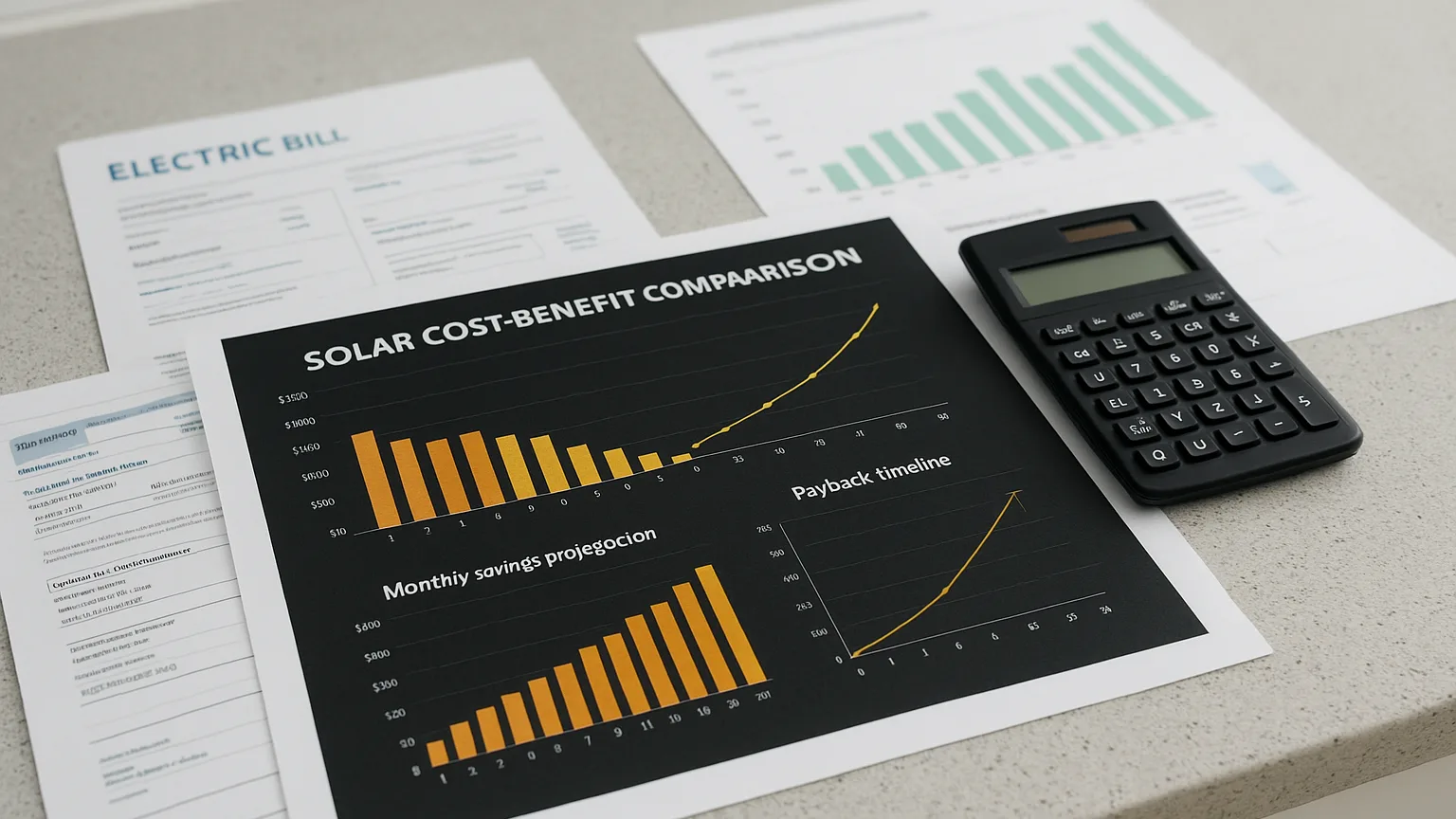
Walk into any solar trade show and count the banners. Panel efficiency. Degradation rates. Inverter specs. Tier-one this, bifacial that. Now walk into a kitchen where a couple is deciding whether to spend $28,000 on a roof system. Nobody in that room is talking about watts. They are talking about the electric bill, the loan payment, and whether this thing pays for itself before the kids leave for college.
That gap is where most clean-energy marketing budgets go to die. Marketers inherit the language of engineers because engineers built the industry. But the person signing the contract is doing arithmetic, not physics. Sell the math and you sell the system.
The Spec Sheet Is a Comfort Blanket for Sellers, Not Buyers
Specs feel safe. They are defensible, factual, and easy to approve in a legal review. They also put the burden of translation on the customer. When your ad says "22.8% module efficiency," you are asking a homeowner to do three steps of mental work before they feel anything. Most people quit at step one. Financial framing skips the translation. "Your bill drops from $210 to $34, and the system pays for itself in year seven" lands instantly, and it creates something specs never do: a reason to act now instead of next spring.
Spec-first campaigns also invite comparison shopping on the wrong axis. Once a buyer believes panels are the product, they will price-shop panels, and you will lose to whoever cuts margin hardest. Once a buyer believes a predictable monthly cash position is the product, the conversation moves to trust, warranty, installer quality, and practical sequencing questions like whether to rough in solar wiring during a roof replacement instead of paying twice. That is a fight good companies win.
What Buyers Actually Search For
Search behavior tells the story better than any brand survey. Volume clusters around cost, savings, worth-it questions, and financing, not cell architecture. The queries that convert look like this:
- "Is solar worth it in [state]" — a payback question wearing a doubt costume
- "Solar payback period calculator" — high intent, low competition, criminally under-served
- "Solar loan vs cash which is better" — a buyer at the finish line who nobody is helping
- "Will my bill really go to zero" — skepticism that deserves a straight answer
- "What happens if I sell my house" — the objection that kills more deals than price
Every one of those is a money question. Build your content library around money questions and you show up in the moments that matter, including inside AI answer engines that increasingly summarize these decisions before people ever reach a website.
Build a Calculator, Not Another Guide
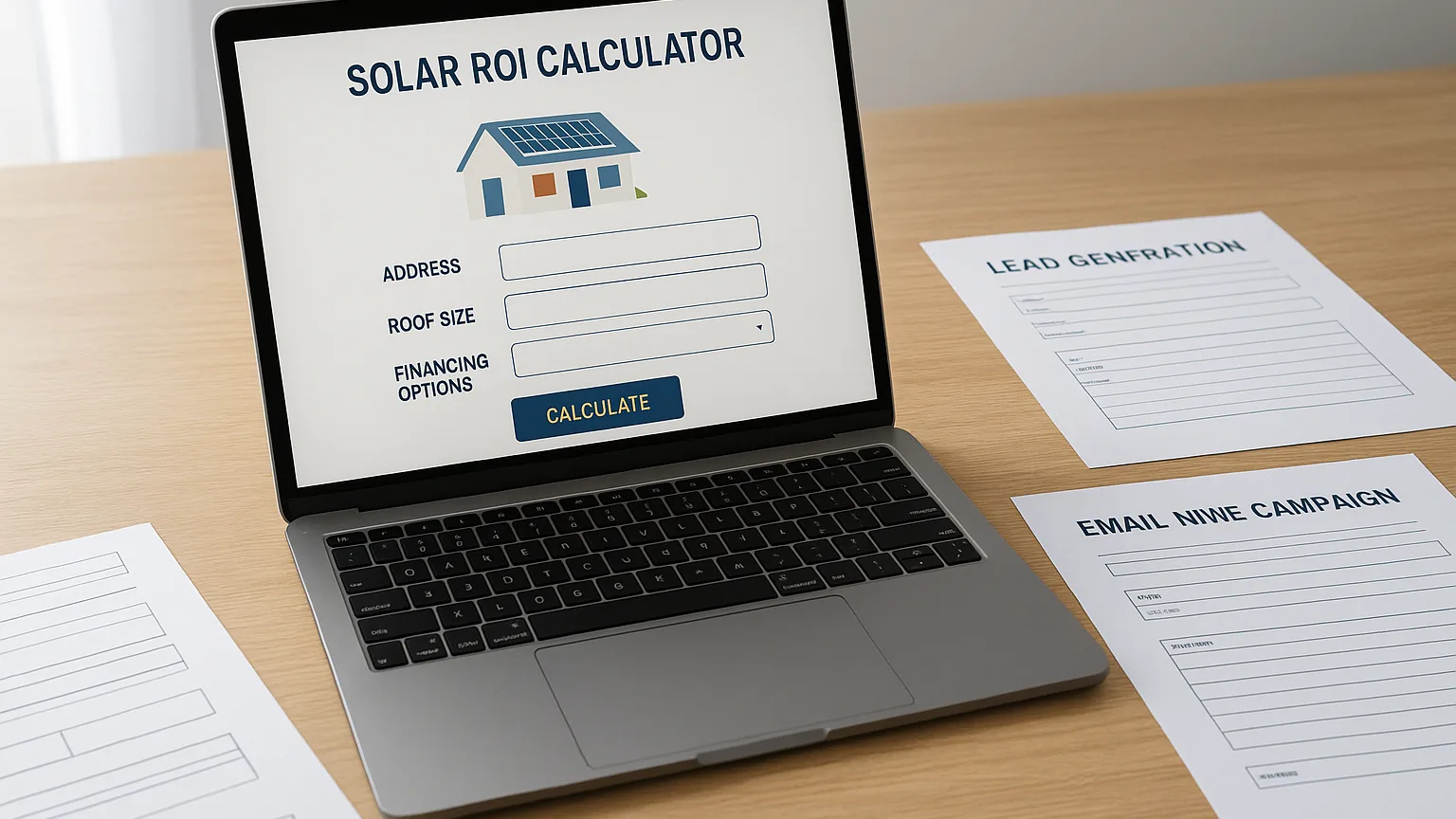
The best-performing lead magnet in clean energy is a calculator that gives a real number. Not a gate, not a PDF: a tool that takes four inputs and returns a payback year, a lifetime savings figure, and a monthly cash flow comparison. It delivers value before asking for anything, and the output is personal. A guide tells someone what solar does. A calculator tells them what solar does for them. That difference is worth two to five times the conversion rate in most accounts I have seen.
“The moment a homeowner sees their own numbers instead of a national average, the conversation changes from curiosity to planning,” says Marisol Vega, senior demand strategist at a firm specializing in clean energy project finance, who notes that financing clarity is usually the last domino to fall before a signature.
Calculator Design Rules That Hold Up
- Four inputs maximum. ZIP code, monthly bill, roof direction, own or rent. Anything more and drop-off spikes.
- Show the result before the form. Gate the detailed PDF report, never the headline number.
- Be honest about ranges. "Payback in 6 to 9 years" beats a suspiciously precise 7.3.
- Include the loan scenario. Most buyers are not paying cash, so a cash-only result is a fantasy.
- Save the inputs. Those values become the personalization engine for every email that follows.
Commercial and industrial buyers need a different tool, not the same one with bigger numbers. They want internal rate of return, depreciation treatment, and an energy cost curve against forecasted utility increases. Build the second calculator. It generates fewer leads at ten times the value.
Attribution When the Sales Cycle Runs Nine Months
Here is the uncomfortable part. Residential solar consideration commonly runs four to twelve months. Commercial can run two years. Standard last-click attribution will tell you branded search and direct traffic are carrying the business, so you will cut the top-of-funnel spend that actually created that demand. Then leads dry up two quarters later and nobody connects the dots. Three moves fix most of it.
Move One: Track Stages, Not Just Conversions
Define four or five real milestones and measure movement between them: calculator completed, proposal requested, site survey booked, contract signed. Now you can see which channels produce leads that advance versus leads that stall. Paid social often looks great on volume and terrible on stage two. Organic content usually looks slow and then quietly wins.
Move Two: Extend Your Lookback Windows
A 30-day window is malpractice in this category. Push to 180 days minimum, and hold a separate 365-day view for commercial. The delta between your 30-day and 180-day picture is a map of the channels you have been systematically underfunding.
Move Three: Ask the Buyer
Put one open-text field on the contract paperwork: "What first got you thinking about this?" Self-reported attribution is messy, but across a few hundred deals it surfaces patterns your pixel will never catch, including neighbor referrals, local news, and that one YouTube video from eleven months ago. Brands in other long-cycle, high-trust categories use the same trick, and it is part of why service businesses like jiffy lube franchising teams track word-of-mouth as a formal channel rather than an accident.
Nurture Sequences That Argue With Money, Not Adjectives
Most solar nurture flows are five emails of enthusiasm followed by silence. The buyer is not unenthusiastic. The buyer is unconvinced, and enthusiasm does not resolve doubt. Proof does. Structure the sequence as a series of small financial arguments, each closing a specific objection:
- Email 1: Their calculator numbers, restated cleanly, compared to neighbors in the same ZIP.
- Email 2: A real utility bill before and after, screenshots included, from a similar house.
- Email 3: The loan math. Payment versus current bill, side by side, crossover month named.
- Email 4: The resale question answered with actual appraisal data, not reassurance.
- Email 5: Ten years of local utility rate history, framed as the cost of waiting.
- Email 6: What goes wrong and who pays. Warranty, monitoring, service response times.
- Email 7: One short customer story about the decision itself, not the equipment.
Then pause and start a slower monthly cadence. Some buyers need eight months and a rate hike notice. Stay present without nagging.
The Objection Nobody Emails About
Fear of being sold to. Solar has a canvassing reputation problem, and plenty of homeowners assume every quote hides something. Address it head-on: publish your assumptions, show the escalation rate you used, explain what happens in a cloudy year. Transparency is a conversion tactic, and trust-building content works the same way in other high-consideration home services, which is why local firms like american fence lean on visible proof of work rather than pressure.
Creative That Carries a Number
One rule for every ad, landing page, and video thumbnail: it must contain a number a human can feel. Not 400 watts. Not 25-year warranty. A dollar figure, a payback year, or a percentage of a bill eliminated.
Test the number, not the adjective. "Cut your bill by 82%" against "Pays for itself in 6 years" against "$41,000 over 25 years." One will win by a wide margin in your market, and you will not guess which. Rate-sensitive markets respond to bill reduction. Equity-rich markets respond to lifetime totals. Storm-exposed markets respond to a deadline, which is why commercial messaging that urges buyers to lock in a microgrid ahead of peak season converts on timing as much as savings. Newer markets respond to payback speed because they need permission to believe it works at all.
The Meter Runs Both Ways
The clean-energy category has spent fifteen years talking about hardware to people who were never buying hardware. They were buying a smaller bill, a hedge against rate hikes, and the quiet satisfaction of owning their own power. Watts are how the industry describes the product. Payback is how the customer experiences it. So build the calculator that gives a real answer, stretch the attribution window until it matches how people actually decide, write nurture emails that win arguments with arithmetic, and put a number on every piece of creative. The brands that make the financial story the whole story will keep winning deals while everyone else prints efficiency ratings on banners nobody reads.


© Copyright - Martech Executors - 2024
Website Powered by Elite Web Design and their Scottsdale team.