

The "Shiny Platform Trap": Why Your Last Big Purchase Underperformed

In the first part of this series, we pulled apart the quiet spending that leaves your budget before anyone makes a real decision. Now we move to the loud spending. The big signature. The platform you were proud to announce.
Here is the uncomfortable pattern. The money that disappoints you most is rarely the money you spent carelessly. It is the money you spent carefully, with a committee, a scorecard, and three vendor demos. That is what makes the shiny platform trap so hard to see. It wears the costume of good process.
What The Trap Actually Looks Like
A team lands on a problem. Leads are slipping. Reporting is messy. Handoffs are slow. Someone suggests a tool. Within weeks the conversation shifts from the problem to the shortlist, and somewhere in that shift the original problem stops being the subject and becomes the excuse.
It also helps to spend a minute on estate wealth tax estate before settling on an approach.
By the time the contract is signed, the business has bought capability, not outcome. Capability sits there waiting to be used. Outcome shows up in revenue. Those two things are separated by work nobody budgeted for.
You already know how this ends. Six months in, adoption is at thirty percent. Two people know how the thing really works. The reporting still gets rebuilt by hand every Monday. And the renewal notice arrives with a straight face.
The Real Flaw Is Not The Tool
Vendors get blamed for this constantly, and mostly unfairly. Most platforms do roughly what they claim. The flaw sits upstream, in how the decision was framed. We evaluate what a platform can do instead of what it will change in the next ninety days, in the hands of the specific people who already work here, under the workload they already carry. That single reframe changes almost every buying conversation you will have this year.
Screening An Idea Before Anyone Falls In Love
Before any demo, before pricing, before a champion gets emotionally invested, put the idea through four questions. If it cannot survive all four, you have found a distraction wearing a growth costume.
1. Whose calendar does this change on Monday?
Name the person, not the department. If nobody's day looks different within two weeks of go live, the platform is not a lever. It is inventory. Real growth tools remove steps from someone's actual routine, and that person can usually describe the step they hate before you ever mention software.
2. What are we switching off?
Every genuine improvement replaces something. If the answer is "nothing, this is additive," you are stacking cost on cost. Stacking is how companies end up with four tools that each solve nine percent of a problem.
3. Where does the value show up in the numbers?
Pick the line. Faster quote turnaround. Higher lead to appointment rate. Lower cost per booked job. If the benefit only shows up as "better visibility," you are buying a feeling.
4. Who fails if this works?
Strange question, deliberately. Real change creates friction because somebody loses a workaround, a spreadsheet, or a bit of control. Zero friction usually means zero change. "The buys that go smoothest in month one are the ones that go nowhere by month six, because nobody had to give anything up," says Marcus Feldner, principal consultant at a firm specialising in managed IT services.
Four questions, not fourteen. Long evaluation matrices feel rigorous and behave terribly, rewarding vendors with the most features rather than the most fit. Four questions force the conversation back to behaviour, and behaviour is where returns live.
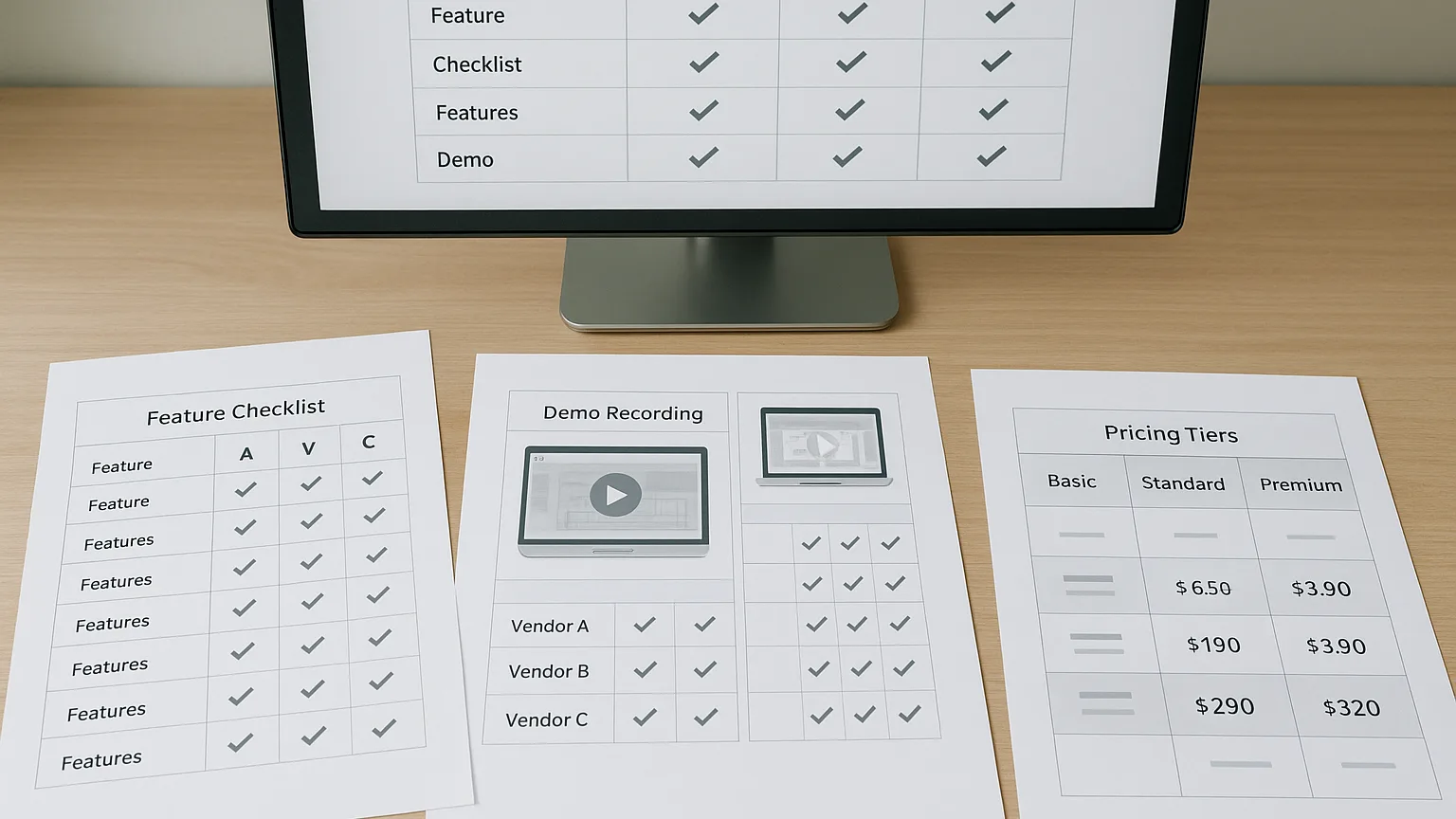
Which Purchases Actually Touch Your Pipeline
Not everything you buy needs to be a growth lever. Some things are hygiene, and that is fine, as long as you know which is which and price it accordingly. The damage comes from paying growth-lever prices for furniture. Here is a simple sort that holds up across industries:
- Growth levers shorten the distance between a stranger and a paying customer, or between a customer and their second purchase. They touch pipeline directly.
- Capacity tools let the same team handle more volume without breaking. Valuable, but only when volume is actually the constraint.
- Visibility tools tell you what happened. Necessary, rarely urgent, and almost never worth premium pricing until you can act on what they show.
- Furniture looks impressive in a stack diagram and changes nobody's behaviour. This is where budgets go to die quietly.
Sort your last three purchases into those buckets honestly. Most leaders find at least one item they bought as a lever that has been sitting there as furniture the whole time.
The Constraint Test
A tool only compounds if it sits on your actual constraint. If your constraint is lead volume, a slicker CRM will not save you. If your constraint is follow up speed, a new ad platform just pours more water into a leaking bucket.
Service businesses figure this out faster than most, because the constraint is physical and visible. Read how operators approach lawn care growth and you will notice the pattern: routing and retention get fixed before anyone spends more on demand generation. The same discipline applies whether you sell software or sod. And capital tied up in a platform is capital not doing something else. Owners who think as hard about protecting real estate wealth as they do about their next software renewal tend to weigh new operating commitments against alternative uses of the same dollar, and that habit belongs in software decisions too.

Earn The Contract With A Small Test First
The best protection against the shiny platform trap is refusing to buy at full scale until the thing has proven itself small. Not a trial. A proof. A trial asks "does this software work?" A proof asks "does this software change our numbers with our people?" Very different questions.
How To Structure One
- One team, one workflow. Pick the noisiest bottleneck, not the easiest.
- One baseline metric, written down first. Record it before you start. Memory is generous and unreliable.
- A named owner with real hours. Not a champion in name only. Someone whose other work is reduced to make room.
- A kill date. Ninety days out, with a pre-agreed threshold. If the number does not move, you walk, and nobody loses face.
That last item does most of the work. Sunk cost creeps in the moment a decision has no exit. Naming the exit in advance turns a purchase into an experiment, and experiments are much cheaper to be wrong about.
What A Good Proof Reveals
Often the proof shows the platform works fine and the process around it does not. That is a gift. You just saved yourself from scaling a broken process at premium prices. Which is exactly why sequencing matters so much, and why counterintuitive sequence that doubles return deserves its own examination before your next planning cycle.

Warning Signs You Are Already In The Trap
Sometimes the purchase has been made and the question is whether to double down or cut. These signals tend to show up before the numbers do.
- The tool's main advocate has left the company, and nobody else can explain why it was bought.
- Someone maintains a parallel spreadsheet "just for the real numbers."
- Training keeps getting rescheduled because there is never a quiet week.
- Reports come out of the platform and then get manually rebuilt before anyone trusts them.
- You describe the value in future tense, still, eight months later.
Three or more of those and you are paying rent on something you do not live in. The fix is not always cancellation. Sometimes it is a deliberate reset: strip the configuration back to one workflow, retrain, and rebuild trust in the data before adding anything else.
Buying Discipline Is A Competitive Advantage
Competitors have access to the same platforms you do. Pricing is public. Features get copied within two release cycles. What does not get copied is the discipline to say no to a good tool at the wrong time. Each purchase you skip leaves capital and attention available for the one that actually sits on your constraint, and once you have mapped the invisible spend described in budget line nobody audits, you will have room to make those bets properly. Over a few years, the gap between disciplined and enthusiastic buyers becomes very hard to close.
The Signature Matters Less Than The Ninety Days After It
Disappointing platform purchases almost never fail at the moment of purchase. They fail in the framing, weeks earlier, when a business problem quietly turned into a shopping problem. The demo was honest, the features were real, the price was fair, and none of that mattered because nobody had answered the harder questions: whose day changes, what gets switched off, which number moves, and who has to give something up for this to work. Sort your spending into levers, capacity, visibility, and furniture, and the picture clarifies fast. Most stacks carry more furniture than anyone wants to admit.
The way out is smaller and slower than most buying committees want. Prove it on one workflow, with one metric written down beforehand, one owner who has real hours, and a kill date you agree to before enthusiasm sets in. Do that consistently and your tools start earning instead of accumulating. In the next part of this series, we look at why the order in which you fund people, process, and platforms decides your payback period, and why most companies run that sequence exactly backwards. Then, before spring planning, there is one measure your board should be asking about, explored in metric your board isn't asking.


© Copyright - Martech Executors - 2024
Website Powered by Elite Web Design and their Scottsdale team.